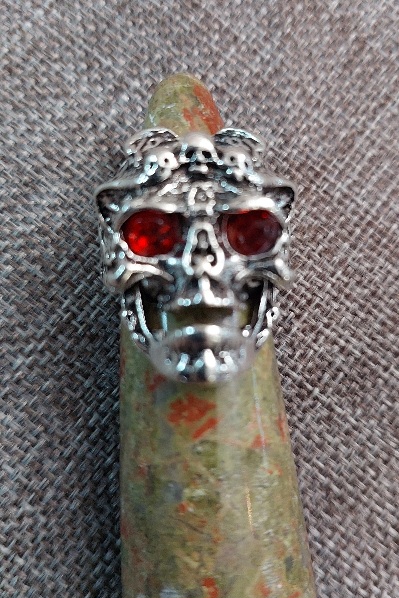
The skull carries deep and varied symbolism across cultures, and its meaning depends on the context. Here’s a breakdown of its most common interpretations:
🕯️ 1. Mortality and Impermanence
-
The most universal symbolism of the skull is a reminder of death and the fragility of life — a “memento mori,” Latin for remember you will die.
-
It encourages reflection on how fleeting life is and the importance of living meaningfully.
🌑 2. Transformation and Rebirth
-
In many spiritual traditions, the skull represents transformation, rebirth, and the shedding of the old self.
-
It’s often seen as a symbol of change — the end of one phase and the beginning of another, similar to how decay leads to new life.
🔥 3. Power and Protection
-
Skulls are sometimes viewed as protective symbols that ward off evil or danger.
-
Warriors and shamans have historically used skulls to embody strength, courage, and triumph over death.
🌺 4. Celebration of Life (e.g. Día de los Muertos)
-
In Mexican culture, sugar skulls used during Día de los Muertos (Day of the Dead) celebrate the continuity of life and honor loved ones who’ve passed away.
-
Here, the skull is not morbid — it’s colorful, joyful, and represents love and remembrance.
💎 5. Wisdom and Enlightenment
-
Esoteric and alchemical traditions sometimes see the skull as a vessel of consciousness — the “seat of the mind.”
-
It can symbolize inner wisdom, awakening, and spiritual insight.
🖤 In summary:
| Symbolic Theme | Meaning |
|---|---|
| Mortality | Reminder of life’s impermanence |
| Transformation | Death leading to renewal |
| Protection | Strength against harm or evil |
| Celebration | Honoring life and ancestors |
| Wisdom | Enlightenment and awareness |
| Weight | 0,013 kg |
|---|---|
| Dimensions | 3 × 3 × 3 cm |
Reviews
There are no reviews yet.